Is 1xBet Legit in Cameroon? Licence and Withdrawal Checks
A hypothetical withdrawal file
Imagine a Cameroon customer requests a withdrawal after completing account checks. The balance is visible, but the service asks for another identity document, the payment route differs from the deposit route, or the request remains pending. That file would not by itself prove a scam. It would show why the exact host, operating entity, licence evidence, account terms and support record must be preserved together.
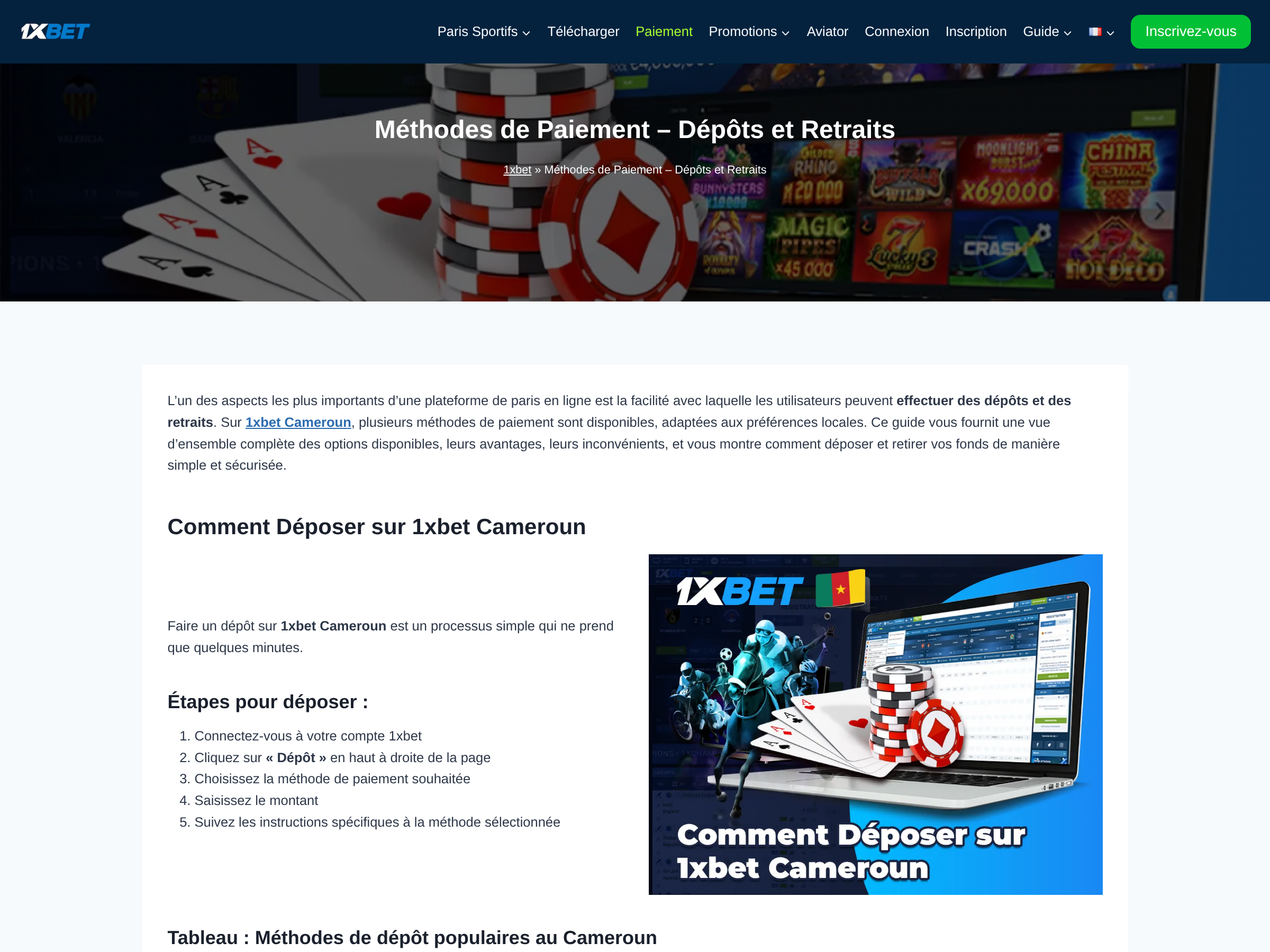
The current assessment is amber. The available packet identifies or presents 1xbet.com.cm through a brand-controlled payment page, while a separate user-review source contains allegations and a moderation warning. No current public Cameroon register in the supplied evidence confirms the exact combination of domain, operator and local authorisation. The result is therefore open evidence, not a finding of fraud or legality.

What the evidence actually establishes
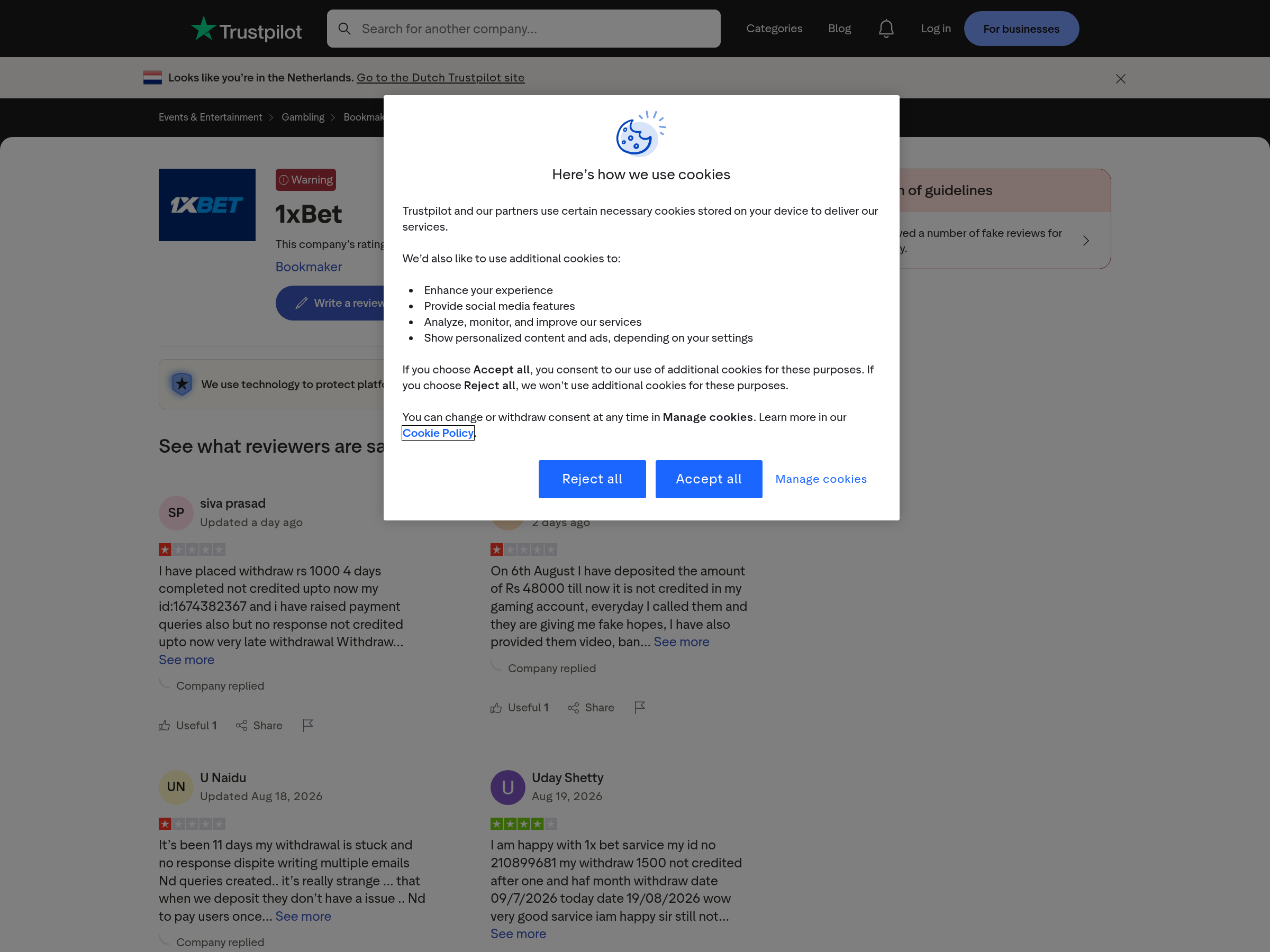
The payment page consulted identifies or presents the brand and the Cameroon domain. Any operator or licence statement appearing there remains an interested statement until independently corroborated. The user-review source has a substantial volume of reviews and a moderation warning, but individual accounts are user allegations rather than findings by a regulator or court.
Cameroon’s supplied primary legal source states that Decree No. 2019/2300/PM applies Law No. 2015/012 and sets regimes and controls for entertainment, money and games of chance. That legal framework explains why a commercial claim should be checked against competent local records. It does not, on its own, prove that this domain is authorised.
A tax page supplied in the evidence packet says that the General Tax Code provides for a tax on games and mentions games organised through mobile telephone; the consulted text indicates a 15% rate. Tax treatment is not the same as a gambling licence. The BEAC is the monetary authority of CEMAC, and BEAC CFA francs are the market’s reference currency. Currency support likewise does not establish an operator’s authorisation.
| Question | Supported position | What remains unknown |
|---|---|---|
| Which host was observed? | 1xbet.com.cm was presented by the supplied payment-page capture. | Whether every login, payment and withdrawal journey stays on that host. |
| Who operates it? | The independent operating entity for the Cameroon domain is not confirmed. | Legal name, registered address and relationship with the brand. |
| Is a local licence proven? | A licence number is alleged on brand pages. | A current public record matching the exact domain and entity. |
| Do user reports prove wrongdoing? | They provide contextual signals and allegations. | Whether any individual allegation was verified by a competent authority. |
Host, operator and licence matching
A reliable licence check needs more than a familiar name or a number printed on a payment page. Record the complete host, including the ending .com.cm; compare the host shown before login, during deposit and at withdrawal; save the legal operator name from the terms; and match that name and domain against a current competent register. The same licence number attached to another company, host or market is not an exact match.
The packet records licence number 000020/A/MINAT/SG/DAP/SDLP/SJ as alleged by brand pages, but no expiry date is supplied and no current public register was found in the accepted evidence to confirm the match. That creates an evidence gap. It is not a red signal because the packet contains no official adverse record or corroborated documented adverse finding; it is not green because current primary evidence does not support the precise domain and entity together.
The legal framework should be read as background to verification, not as a substitute for a register entry. A customer should also distinguish the domain owner, payment intermediary, customer-support provider and licensed operator. They may be related, but the supplied evidence does not establish that they are the same entity.
| Licence-check item | Status in the supplied packet | Practical check |
|---|---|---|
| Claimed licence number | Present as a brand-page allegation | Search for the number in a current competent record. |
| Exact domain match | Not independently confirmed | Check that the record names 1xbet.com.cm, not only a similar host. |
| Exact legal entity | Not confirmed | Compare the entity in the record with the service terms and payment details. |
| Validity or expiry | No expiry supplied | Confirm the current status and dates directly from the competent source. |
| Market scope | Not established | Check whether the permission covers the offered online activity in Cameroon. |
Is it a scam or legitimate?
The evidence does not justify either a clean bill of health or a fraud label. “Legitimate” can mean several different things: a real website, a functioning account, a valid local authorisation, or a service that pays a particular withdrawal. Those are separate questions. The supplied brand capture supports only the observation that the domain and service presentation were available in the reviewed material. It does not prove the identity of the operator, a local licence, or successful payouts.
The user-review source is useful for identifying recurring concerns to investigate, but it is not a primary decision record. Reviews may be incomplete, mistaken, disputed or affected by moderation. They should be retained as context, with dates and exact wording, rather than converted into a factual accusation. In the same way, the absence of a public record in the supplied packet is an unresolved limitation, not proof that no authorisation exists anywhere.
The amber signal means that a cautious reader should verify before depositing, keep records and avoid treating a claimed licence as confirmed. It does not mean that every customer will experience a withdrawal problem, and no withdrawal test was supplied for this assessment.
Payments and currency checks
The accepted evidence does not establish a complete payment-method list, processing times, fees, limits or a tested withdrawal outcome. A payment page is not enough to promise that each displayed method remains available to every customer or that a deposit route will be available for withdrawal. Before sending funds, note the exact method, currency, minimum and maximum amount, any stated fee, and the identity of the recipient shown by the payment flow.
For Cameroon, preserve the transaction reference and the amount in the displayed currency. The supplied BEAC source provides monetary context for the CEMAC region, but it does not confirm which payment rails the service uses or who processes a particular transaction. A tax rule also does not tell a customer how a withdrawal will be handled.
| Payment or payout question | Evidence status | Safe record to retain |
|---|---|---|
| Deposit method available | Not independently documented in the packet | Method name, date, amount and confirmation reference. |
| Withdrawal method | No tested result supplied | Request timestamp, chosen route and status messages. |
| Fees and limits | Not established | The terms or cashier screen shown at the time of the request. |
| Processing time | Not established | Every support response and status change. |
| Currency treatment | BEAC CFA franc context is supported | Amount before and after any conversion or charge. |
A customer should not pay an additional “release”, “tax” or “verification” amount to an individual contact merely because a withdrawal is delayed. First compare the request with the official account area and preserve the communication. The available packet does not establish that such a request has occurred on this service; this is a general fraud-prevention step, not an allegation.
KYC and account controls
No accepted record describes the service’s full KYC procedure, document list, review time, age threshold, source-of-funds process or account-closure policy. Do not assume that an account opening, successful deposit or promotional message means identity checks are complete. A later request for identity evidence can be part of an ordinary compliance process, but the reason, permitted documents and handling of personal data should be stated in the applicable terms and privacy information.
Use only the official account area reached through the verified host, and check the address before uploading identity documents. Do not send a passport, national identity card, selfie or proof of address to an unverified social-media account or an address supplied by an unknown intermediary. Keep a dated copy of what was submitted, but do not publish sensitive documents in a complaint or review.
If the account is restricted, ask support to identify the contractual clause, missing information and next step in writing. The evidence packet cannot establish whether any particular restriction is justified, unlawful or discriminatory. A support refusal may be frustrating, but it is not by itself proof of criminal conduct.
A withdrawal casebook for disputes
Build a chronological file rather than relying on memory. Start with the host and account identifier, then record the deposit, wager or relevant account event, withdrawal request, KYC request, support exchanges and any final outcome. Screenshots should show the date, status and surrounding context without exposing passwords, full card numbers or identity numbers.
| Case-file stage | Record | Why it matters |
|---|---|---|
| Before payment | Host, terms version, cashier details and promised conditions | Establishes what was shown before money was sent. |
| Deposit | Amount, currency, method and transaction reference | Links the account to the payment event. |
| Withdrawal | Request time, amount, route and status | Shows the precise issue under review. |
| Verification | Request, response, documents and timestamps | Separates an information request from an unexplained delay. |
| Escalation | Ticket numbers and written replies | Creates a traceable support history. |
| Outcome | Paid, cancelled, returned, restricted or unresolved | Prevents assumptions about the final result. |
A single unresolved case is evidence of that customer’s unresolved case, not automatically evidence of a systematic scheme. Conversely, repeated consistent records from independent customers may justify closer scrutiny, but they still require corroboration before being described as an established adverse finding.
Complaint and escalation route
Begin with the service’s documented support channel and request a written response. State the host, account identifier, transaction reference, amount, date, exact requested remedy and a reasonable response deadline. Do not exaggerate the facts or threaten staff. If the response is incomplete, keep the ticket and escalate through any formal complaints route stated in the terms.
For Cameroon-specific information about the legal framework, consult the supplied Cameroon gambling-law decree. For the tax context, the supplied Cameroon tax information is relevant, but tax information is not a complaint decision. The supplied BEAC website provides monetary-authority context, not a finding about this operator.
A complaint should distinguish facts, documents and allegations. Say “the withdrawal remained pending according to the account record” rather than “the operator stole my money” unless a competent dated source has established that conclusion. A regulator, court or consumer authority may have its own submission rules; follow those rules and provide redacted records. Our complaints and scam warnings guide explains how to structure a file, while the Cameroon licence guide covers the verification questions.
Clone and impersonation checks
A copied logo is weak evidence. Compare the complete host character by character, including punctuation and the country-code ending. Be cautious with sponsored search results, shortened links, messaging-app contacts and domains that add a word, hyphen or different ending. A page can imitate the colours and wording of a known service while sending deposits to a different recipient.
Before signing in, type or independently verify the host rather than following an unsolicited link. Check whether the browser address changes during payment, whether the terms identify the same entity, and whether support directs you to the same domain. Do not infer authenticity from an image, logo, review count or social-media follower total.
Evidence chronology and method
The accepted records were checked on 27 August 2026. The payment-page evidence is an operator source and was treated as a statement of presentation, not independent proof. The user-review evidence was treated as contextual because reviews and moderation notices do not establish a regulator’s conclusion. The Cameroon decree, tax information and BEAC material were treated as primary sources for their respective legal, tax and monetary subjects, without extending their claims to operator licensing.
This method separates four questions: what the service presents; what users report; what primary institutions state generally; and what remains unverified about the exact host and entity. The review methodology explains this separation. On that basis, the signal is amber and the evidence basis is open evidence. A green result would require current primary support for the precise domain and entity. A red result would require an official adverse record or corroborated documented adverse evidence. Neither threshold is met in the supplied packet.
What could change the assessment
The assessment could change if a current competent record names the exact domain, legal operator and relevant authorisation, with a verifiable current status. It could also change in the other direction if an official adverse notice identifies the domain or entity, or if independent documented evidence corroborates a material adverse pattern. New user reports alone should remain labelled as allegations unless independently verified.
If a source is outdated, incorrectly attributed or missing important context, send a correction with the source, date, exact claim and supporting document through contact. Corrections should not include unredacted identity documents, passwords, payment credentials or private customer correspondence. The correction route can update the evidence record; it cannot guarantee a particular outcome for an individual dispute.
For safer decisions, compare this open-evidence result with other reviewed casinos, read the payment checks, and consult responsible gambling guidance. If you decide to proceed, use the supplied View the routed option only after checking the host, terms, payment recipient and current licence evidence. Continue after checks.
Frequently asked questions
Is 1xBet a scam in Cameroon?
The supplied evidence does not establish that it is a scam. It also does not verify a current Cameroon authorisation matching the exact domain and operator. The appropriate result is amber: proceed only after independent host, entity and licence checks, and treat user reports as allegations.
Is the claimed Cameroon licence confirmed?
No. The packet records licence number `000020/A/MINAT/SG/DAP/SDLP/SJ` as alleged by brand pages, but no current public record supplied here confirms the exact domain, entity and validity together. The claim should therefore remain unverified.
Does the payment page prove that withdrawals work?
No. It shows how the service presents payment information, but no withdrawal test or independently verified payout outcome was supplied. Keep the request, status, payment reference and support history if a withdrawal becomes disputed.
Can a KYC request prove that the service is fraudulent?
No. An identity request may be part of account controls, but the packet does not describe the service’s complete KYC rules. Check the official host, request the reason and permitted documents, and avoid sending sensitive files to unofficial contacts.
What should I do if a withdrawal is delayed?
Record the host, amount, currency, request time, transaction reference, status and every support reply. Ask for the applicable rule and next step in writing. Do not pay an unverified person an extra release amount, and escalate through the formal route stated in the terms.
Why is the signal amber rather than green or red?
Green requires current primary evidence supporting the precise domain and entity. Red requires an official adverse record or corroborated documented adverse evidence. The supplied packet meets neither threshold: it contains a brand statement, contextual user allegations and general primary legal, tax and monetary sources.
Ministère de l’Administration territoriale
Direction de la promotion de la santé, MINSANTE Cameroun
Commission nationale anti-corruption
Icon Horse domain-icon mirror